Hotter summers hit hard this year. In March 2026, Arizona’s Martinez Lake soared to 110°F, the hottest March temperature ever recorded in the US. Places like Phoenix and Palm Springs also broke records, with heatwaves pushing 20 to 30 degrees above normal.
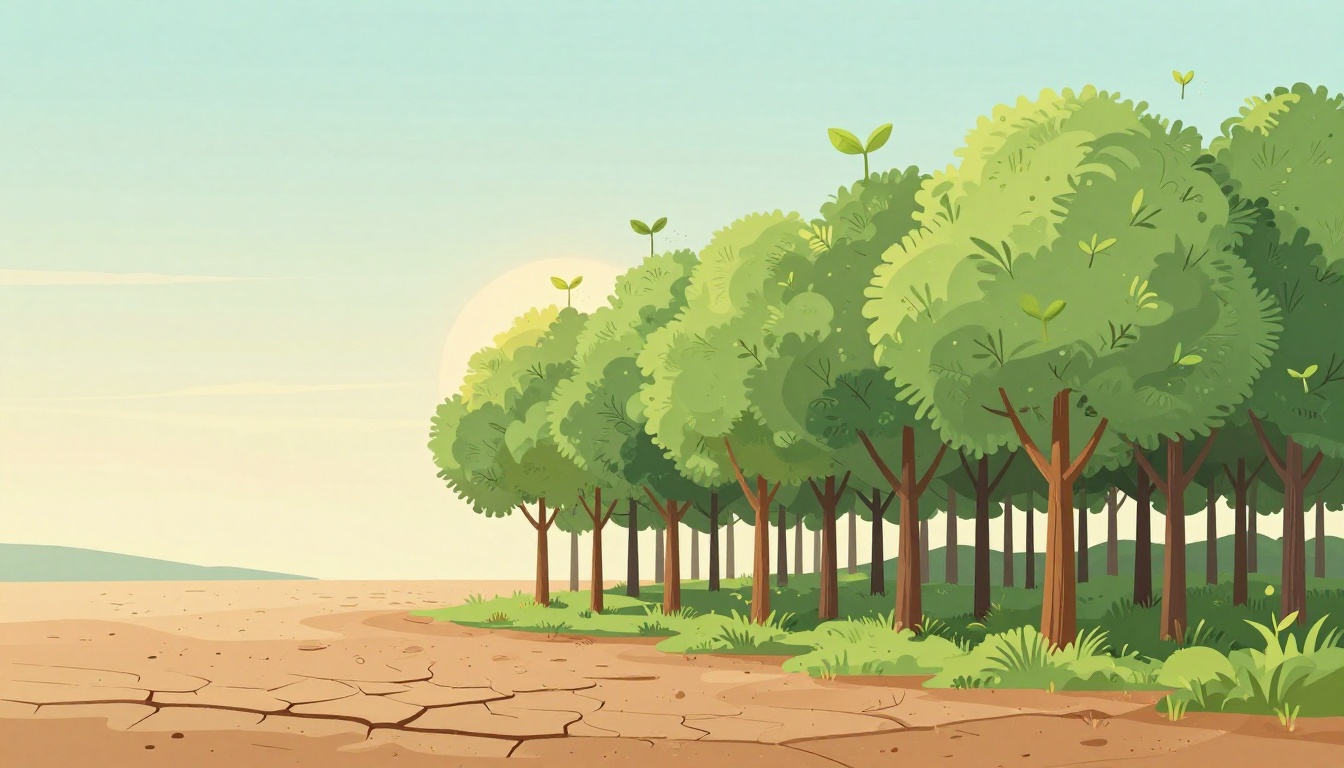
You feel it too, right? Wildfires rage longer, storms grow fiercer. Afforestation offers real help. It means planting trees on land without recent forests, such as old farms or degraded soil. This differs from reforestation, which replants cut forests.
Trees suck up CO2, cool the air, support wildlife, and deliver results in projects worldwide. Afforestation stands as a powerful tool against climate change. Yet it shines brightest alongside emission cuts and habitat protection.
How Trees Pull Carbon from the Air and Lock It Away
Trees act like natural vacuums for CO2. They grab it from the air through photosynthesis. This process turns the gas into fuel for growth. Forests then store that carbon long-term.
Growing trees make land a net carbon sink. They hold more CO2 than they release. Recent studies show newly planted forests drive most global sequestration gains from land changes. For details, check this Nature Communications analysis on forest carbon shifts.
Restoration efforts could remove 7.3 gigatonnes of CO2 equivalent each year, per IPCC data. UNEP notes afforestation boosts sinks for up to 8.8% of needed mitigation by 2035. Over vast areas, potential reaches 130 to 750 gigatonnes.

Photosynthesis: Nature’s Built-In Carbon Capture
Leaves pull in CO2 and water. Sunlight sparks a reaction. Trees make sugars for energy. They release oxygen as a bonus.
This free system runs anywhere trees thrive. Healthy forests lock carbon as they mature. Young ones grow fastest, so they capture most.
In short, photosynthesis powers the whole cycle. It keeps working day after day.
From Air to Storage: Where All That Carbon Ends Up
About half stays in wood, roots, and branches. The rest sinks into soil and dead leaves. Soil holds it for decades, like a savings account.
Afforestation turns bare ground into these sinks over time. Degraded land gains the most. Therefore, smart planting builds lasting storage.
Beyond Carbon: How Forests Cool the Planet
Trees do more than store carbon. They shade soil and release water vapor. This transpiration cools the air around them.
New forests create cooler microclimates. They fight local heatwaves that match global warming effects. Location matters most, studies confirm.
Tropics offer big wins. Dark leaves absorb sun, but cooling from shade and moisture outweighs it. One analysis shows asymmetric forest impacts on tropical temperatures.

The Albedo Surprise and Why Tropics Win Big
Albedo measures how much sunlight bounces back. Light-colored snow reflects well. Dark forests absorb more, which can warm snowy spots.
Tropics skip that issue. No snow means no penalty. Research compares scenarios: one with 450 million extra hectares cools the same as another, but smarter spots win.
Plant in the right place. Then cooling multiplies.
Ripple Benefits: Wildlife, Water, and Human Wins
New forests boost habitats. Birds nest, deer roam, insects thrive. Biodiversity rebounds on old farmland.
Trees regulate water. Roots soak rain, cut floods. They slow desert spread too.
Farmers gain from agroforestry. Trees shade crops, add income from fruit or timber. Villages stay cooler, easing heat stress for people.

These extras make afforestation appealing. It helps nature and communities at once.
Proof It Works: Standout Projects and Real Numbers
China’s Loess Plateau shows scale. Over 40 years, efforts stored billions of metric tonnes of CO2. Recent data marks peak sequestration rates there. See this study on Loess Plateau carbon peaks.
In the US, West Virginia restores red spruce. Since 2015, teams replanted over 3,000 acres. It aids seed production and climate resilience. Learn more from the Regional Red Spruce Restoration Project.
Global models predict up to 0.25°C less warming by 2100 from max efforts. Canada’s boreal plan eyes 3.9 gigatonnes by then. These wins build credibility.

Smart Moves and Honest Limits of Tree Planting
Afforestation aids, but it can’t solve everything alone. Cut fossil fuels first. Otherwise, trees just offset too little.
Challenges include water needs and wrong species harming locals. Fires or poor sites waste efforts. Hype leads to mistakes.
Focus on degraded land. Native trees fit best. Young secondary forests capture eight times more than old ones.
Plant right, and gains multiply. Skip that, and benefits fade.
Top Tips for Maximum Climate Impact
- Protect young, existing forests first; they uptake fastest.
- Choose native species; they thrive without harm.
- Target tropics and degraded spots for cooling and carbon.
- Pair with renewables and emission cuts for real change.
Pull It All Together
Afforestation stores carbon, cools land, and revives ecosystems. Trees act as allies in the climate fight. Projects prove it works on big scales.
Yet pair it with emission reductions. Protect grasslands too. This mix costs less and lasts longer.
Support a local planting drive. Advocate for smart policies. Or plant a tree yourself. Small steps add up. Your action helps cool tomorrow’s world.