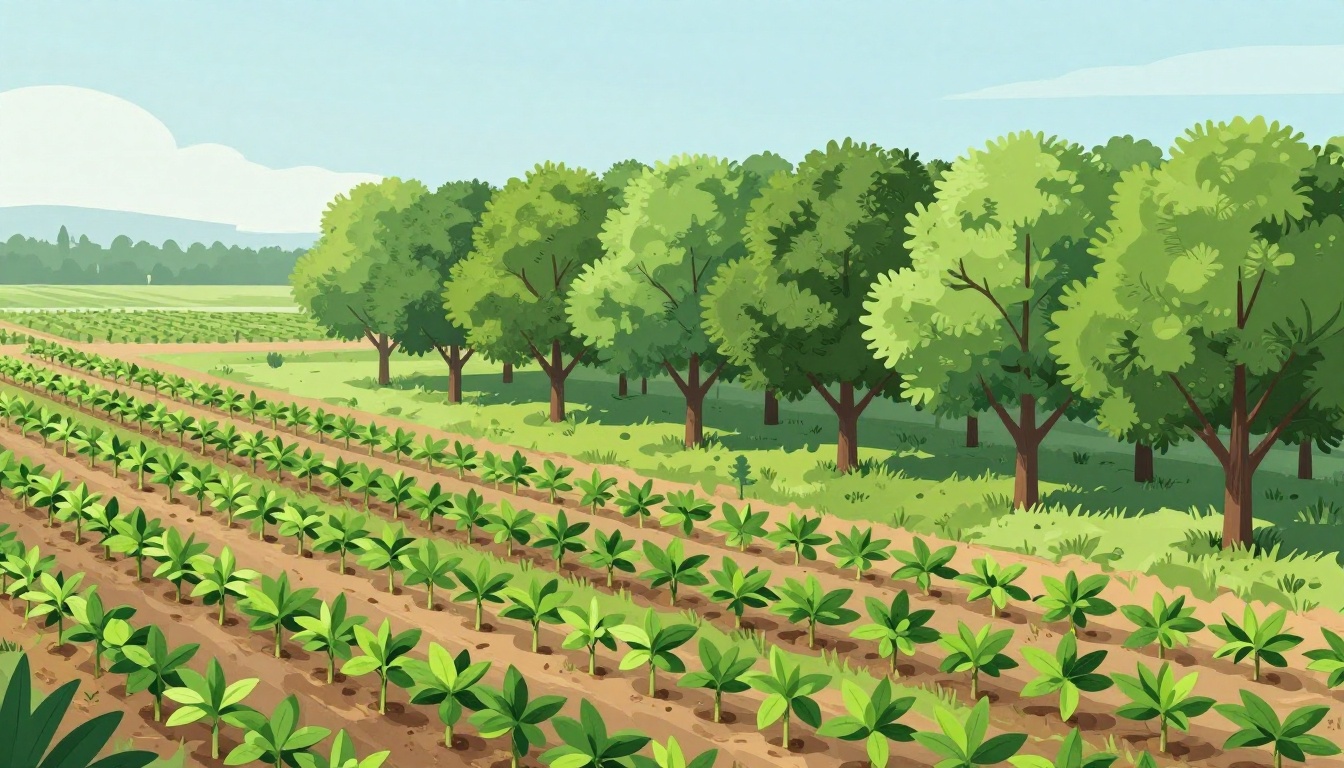
Planting trees on land bare of forests for years changes everything. Afforestation does more than green up spots. It builds lasting gains for the planet and people. Trees pull carbon from the air and hold it for decades. They shelter wildlife and heal soil. Plus, they create jobs and fight erosion.
Consider this: managed forests can capture far more greenhouse gases over a century than wild ones. One analysis shows commercial setups outperform natural growth by a wide margin in carbon storage. A national push could block billions of tons of CO2 by 2120. These efforts also boost biodiversity and water supplies. They strengthen communities too.
You might wonder how trees deliver such steady wins. Let’s start with their role in tackling climate change.
How Afforestation Locks Away Carbon and Slows Global Warming Long-Term
Trees act like sponges for carbon dioxide. They soak it up through leaves and roots. Over time, that carbon stays locked in trunks, branches, and soil. Young forests with 20- to 40-year-old trees grab up to eight times more carbon per hectare than fresh plantings. This makes afforestation a solid tool against warming.
Managed commercial forests shine here. They grow faster and store more because people select strong species and care for them. For details on national potential, check this study on forest-based CO2 mitigation. A strategy across a country might prevent 1.64 billion tons of CO2 emissions by 2120. That’s huge for slowing heat rises and wild weather.
However, soil carbon needs watching. As trees mature, deep soil levels can drop in some spots. Scottish pine tests on old grasslands showed this shift. Wood gains offset it often, but balance matters. Plant diverse types to keep storage steady.
Afforestation builds tough forests too. They handle droughts and storms better than sparse land. Diverse plots resist invasions from bugs or diseases. This resilience pays off over generations.
The Power of Commercial vs Natural Forests
Commercial forests beat natural ones in long-term carbon hold. They capture 269% more greenhouse gases over 100 years, per recent work. Managers space trees right and thin crowds for max growth. Natural regrowth lags because seeds scatter unevenly.
In contrast, wild areas face competition from weeds. Commercial sites use fast-growers like pines or eucalyptus. They pack biomass quickly. Yet, mix in hardwoods for soil health.
Building Resilience Against Future Climate Shifts
Diverse afforestation stands strong. The BiodiversiTREE experiment proves it. After 10 years, mixed plots shrug off pests better. They support more insects and birds too. See the project’s 10-year update.
Single-species runs wilt under stress. Diversity spreads risk. If one type fails, others fill in. This setup weathers floods or heat waves. Forests then store carbon reliably for decades.
Building Thriving Habitats That Boost Biodiversity for Decades
New forests welcome life back. Birds nest in branches. Mammals roam understory. Insects thrive on leaves. Over time, these spots turn into full ecosystems.
Native species work best. They feed locals and resist outsiders. Monocultures flop because bugs wipe them out fast. BiodiversiTREE data backs this. Diverse plantings host richer life and last longer.
Picture deer returning to hills once stripped bare. Owls hunt in thick canopies. Pollinators buzz through flowers. These chains build slowly but endure. For planting success tips, read this SERC press release.
Long-term, biodiversity stabilizes the area. It cycles nutrients and fights invasives. Animals spread seeds farther. The habitat grows tougher each year.
Why Diversity in Tree Species Wins Big
Mixed forests outlast pure stands. Pests hit one type, but spares others. Diseases spread less. Climate shifts? Varied roots tap water at levels.
Slow-growers store deep carbon. Fast ones fill space quick. Together, they balance. A 2026 global tree check found diverse woods hold stress better. Plant oaks with pines, maples with firs.
Strengthening Soil and Water Systems for Future Generations
Tree roots grip earth tight. They stop rain from washing topsoil away. Landslides drop on bare slopes, but forests hold firm. Organic matter builds up too. Leaves rot and feed microbes.
Degraded fields green up fast. Nutrients return as humus forms. This reverses desert creep. Forests fight dryness by shading ground and trapping mist.
Water improves next. Trees filter runoff. They snag pollutants before streams carry them. Roots suck excess in floods and release slow in dry spells. Aquifers recharge steadier.
For erosion data from Ethiopia, view this high-resolution study. Afforestation cuts soil loss big time.
Stopping Erosion and Enriching Degraded Land
Roots weave nets underground. They anchor soil on hills. Fallen leaves mulch surface. Water sinks in, not runs off.
Over decades, carbon builds below ground. Microbes thrive. Fertility climbs. Barren pastures turn productive.
Improving Water Quality and Availability
Canopies break rain impact. Less silt clouds rivers. Trees uptake chemicals like nitrogen. Cleaner flow reaches cities.
In arid zones, shade cools soil. Moisture lingers. Long-term, this fights scarcity. One Alxa Plateau check showed mixed soil gains.
Sparking Jobs and Economic Growth in Communities
Planting needs hands. Workers dig holes and tend seedlings. Management follows with pruning and monitoring. That’s steady work.
Ecotourism blooms next. Trails draw hikers. Cabins fill. Timber harvest adds cash later, if sustainable. The American Chestnut project plants 17 million trees on 30,000 acres. It creates rural jobs and pride.
Communities strengthen. Schools get funds from sales. Locals learn skills. Over time, economies stabilize. No boom-bust cycles.
Real-World Wins: Afforestation Projects Changing Landscapes
China’s Great Green Wall fights desert since 1978. Forest cover hit 25% by 2023. Sandstorms fell sharp. Belts of trees block wind and hold sand.
India aims for a 2.5 to 3 billion ton CO2 sink by 2030. They plant natives on wasted land. Communities join in. Early gains show healthier soils.
Best practices shine. Use locals for buy-in. Pick natives for fit. Monitor growth. A 2026 soil carbon note urges caution on deep storage claims. Balance keeps projects real.
These wins inspire. Science refines methods yearly.
China’s Massive Green Wall Against Desert Spread
Started in 1978, it spans north. Billions of trees planted. Dust storms dropped 20%. Crops grow behind barriers now.
India’s Bold Carbon Sink Ambition
Targets 2030 with mass drives. Bonn Challenge joins. Villages plant and guard. CO2 pulls rise with coverage.
Afforestation pays off big over time. It cools the planet, revives wildlife, heals land, and lifts people. Carbon locks in. Biodiversity booms. Soil and water endure.
Support a project near you. Plant a tree in your yard. Share this if it sparks ideas. What’s your take on local efforts? Science keeps sharpening these tools for a greener future.