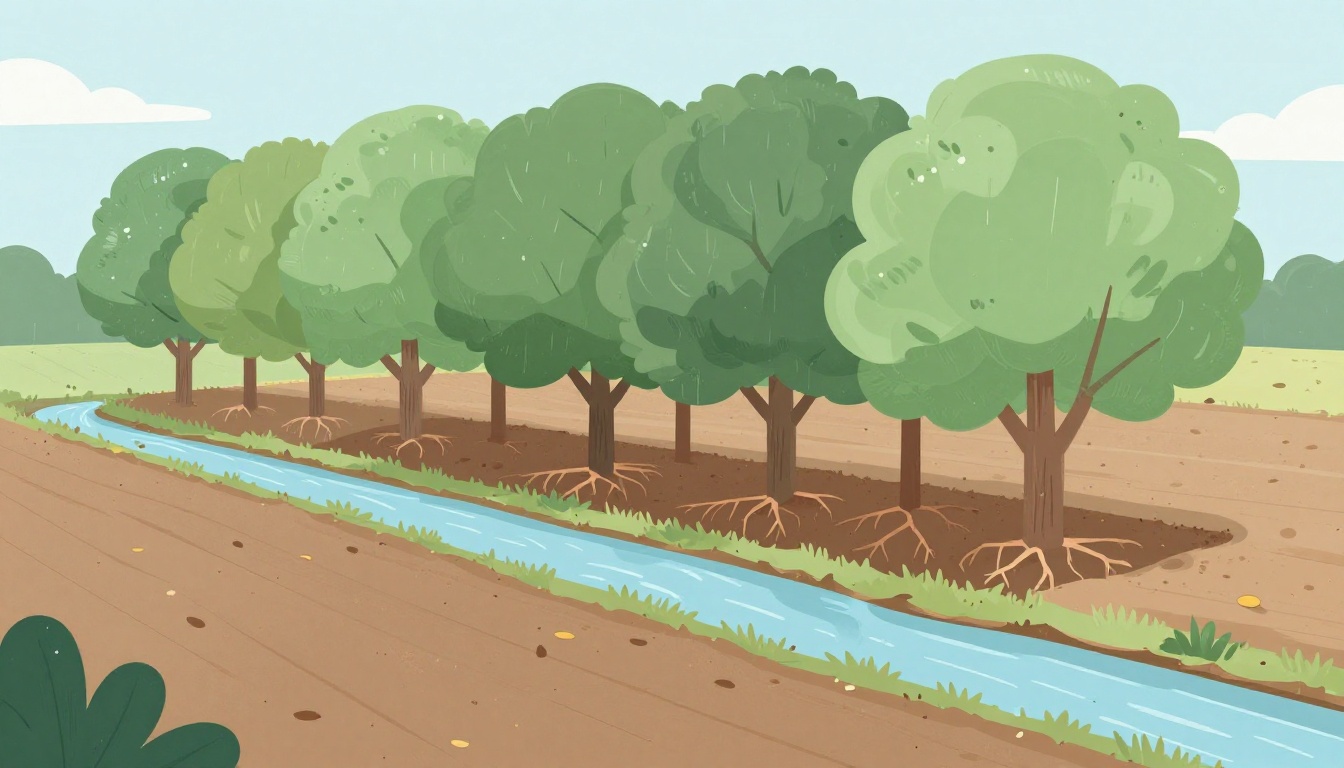
Picture a farm after a heavy storm. Bare soil washes away in rivers of mud. Topsoil vanishes, taking nutrients with it. You see this often in cleared fields or eroded hillsides. Each year, the US loses billions of tons of soil to erosion. Polluted runoff clouds streams and harms fish.
Tree planting offers a straightforward fix. Roots hold soil tight. Leaves filter rain. This process boosts soil and water quality at the same time. Farmers notice better crops. Cities cut cleanup costs. You will learn how roots stop erosion, recycle nutrients, and purify water. Science backs these gains with fresh data from 2026 studies.
How Tree Roots and Leaves Stop Soil Erosion in Its Tracks
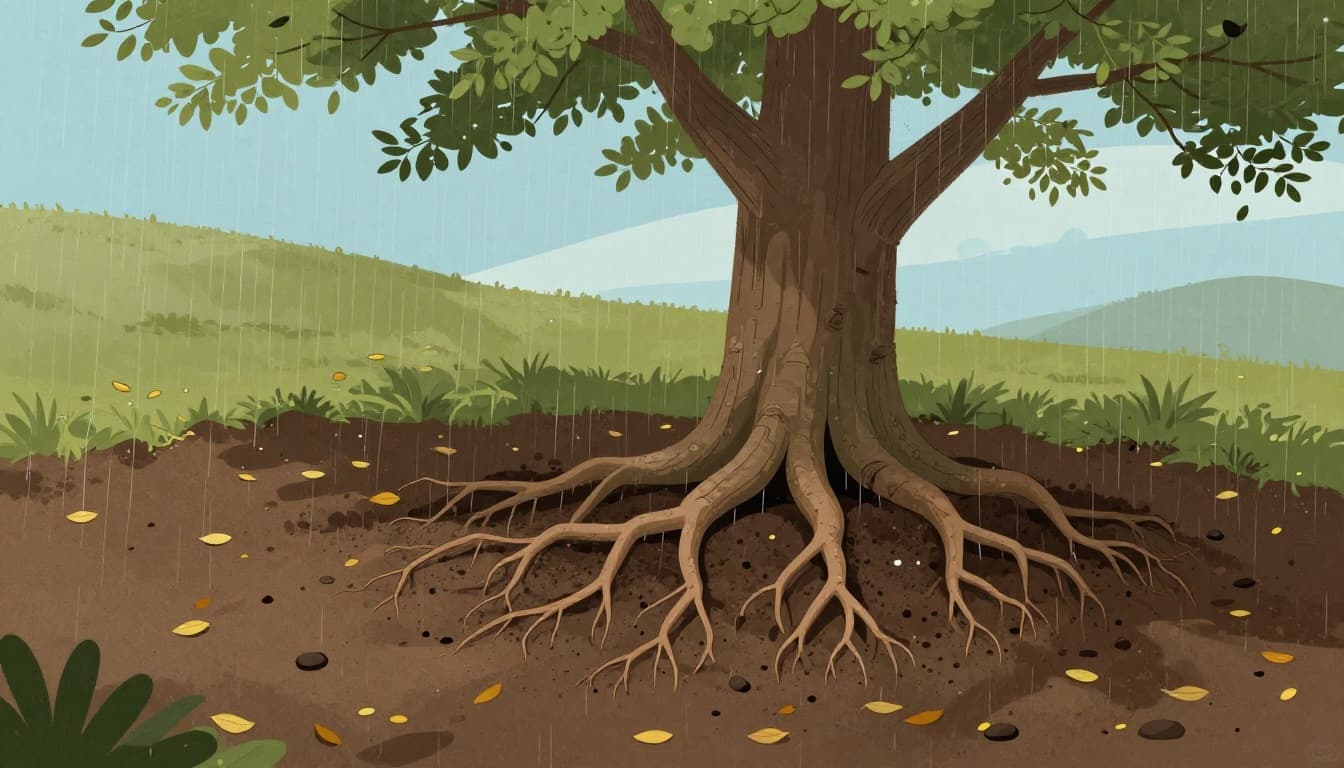
Trees act like anchors in loose dirt. Rain pounds bare ground and carries soil downhill. Wind strips dry fields too. Roots grip particles firm. They spread wide and deep. This setup prevents washouts.
Fallen leaves add protection. They form a thick blanket. Drops hit soft instead of hard soil. Water slows and sinks in. Erosion drops fast as a result.
Communities see real wins. Parks with trees keep paths clear after storms. Grass lawns flood easier. Trees maintain infiltration even after fires. Bare spots lose soil quick.
Stronger soil means steady crops. Less mud in rivers cuts floods. Everyone benefits from this natural shield.
The Anchoring Power of Tree Roots
Roots work like fingers in clay. They bind sand, silt, and clay together. Heavy rain tests this hold. Water flows over slopes. Roots slow it down.
Studies show stable ground in wooded areas. After logging, treed spots lose less topsoil. For example, plants cut erosion by key measures. See this Eco Evidence assessment on plant erosion control.
Deep roots reach stable layers. They channel water away from surfaces. Soil stays put year after year.
Leaf Litter as Nature’s Erosion Shield
Canopies catch rain first. Drops lose force high up. Less splash on ground below.
Litter piles build over time. It traps seeds too. New plants sprout and add cover. This cycle preserves the fertile top layer.
Branches snag windblown dirt. Ground stays enriched. Farmers plant trees along fields for this reason.
Why Trees Supercharge Soil with Nutrients and Organic Matter
Trees pull power from deep earth. Crops grab shallow layers only. Roots tap hidden reserves. Leaves drop and recycle them back.
Nitrogen fixers change air into soil food. They pair with microbes. Other trees feed sugars to bacteria below ground. Everyone shares the wealth.
Organic bits decay slow. They glue particles into crumbs. Air and water move free. Soil turns spongy, like a wet sponge.

Mixed woods raise soil scores. Bigger trees and broadleaves lift the quality index. Degraded spots rebound fast. Karst hills gain fertility through this method.
Better ground grows thick plants. Roots spread farther. The loop keeps building.
Recycling Hidden Nutrients Back to the Surface
Trees reach what shallow roots miss. Phosphorus stays deep often. Litter brings it up each fall.
Nitrogen fixers need that phosphorus boost. They team up in mixes. A meta-analysis confirms nitrogen-fixers build soil carbon.
Crops thrive on this free input. No extra fertilizer needed.
Building Spongy Soil Full of Life
Decaying parts feed fungi and bugs. They weave networks underground. Macropores form for drainage.
Soil holds water better now. Droughts hurt less. Microbes multiply in the rich mix.
Forests double regrowth speed with enough nitrogen, per recent Leeds research. Life buzzes below your feet.
Trees as Natural Filters That Purify Runoff and Streams
Ever notice clear streams near woods? Muddy ones run by farms. Trees trap dirt and chemicals first.
Roots suck up excess nitrogen. Leaves snag pesticides. Bacteria stick to bark. Clean water flows on.
One tree catches 2,380 gallons of rain each year. Cities see 7-27% less stormwater. Bills drop for treatment plants.
Groundwater refills slow and pure. Shade cools streams. Fish survive better in steady temps.
Oakland planted 1,800 trees. They blocked 9 million gallons of dirty water. Riparian strips filter farm runoff best.
Trapping Toxins and Dirt Before They Reach Waterways
Runoff carries metals and waste. Roots absorb them quick. Leaves block big debris.
USDA notes riparian buffers guard streams. Buffers cut pollution 50-90%.
Farmers save on fixes downstream.

Slowing Rain to Recharge Clean Groundwater
Canopies break drops. Soil drinks deep. Floods ease as a result.
Aquifers stay full and toxin-free. EPA explains how trees reduce runoff.
Cities plan more for 2026 resilience.
Keeping Water Cool and Safe for Wildlife
Hot runoff kills bugs and eggs. Shade drops temps 10 degrees. Pollution stays put in cool flows.
Salmon runs improve near plantings. Birds nest safer too.
Fresh Proof from Studies: Tree Planting Delivers Results
Science piles up fast. Mixed plantings lift soil quality indexes. Urban spots gain permeability.
Arbor Day’s 2025 map links forests to water gains worldwide. It spots top reforestation sites.
Virginia riparian plots show carbon pools grow in 12-year stands. Populus trees allocate biomass smart with nutrients.
Minnesota tracks canopy cuts from pests. Still, nets show cleaner water.
- Mixed forests boost SQI on karst lands; phosphorus rules growth.
- NYC trees hold 69 million cubic feet stormwater yearly.
- England aims 260k trees by 2026 for watersheds.
Arbor Day’s Forest-Water map visualizes benefits.
Evidence builds steady. Plant now for proof in your yard.

Trees lock soil against erosion and recycle nutrients deep. They filter runoff, recharge aquifers, and shade streams cool. Dual wins come with solid data from US projects.
Start small. Plant natives in your yard. Join local reforestation. Support farm buffers.
Imagine clearer rivers and richer fields. Your trees make it real. Share your planting stories below. What spot needs trees most?