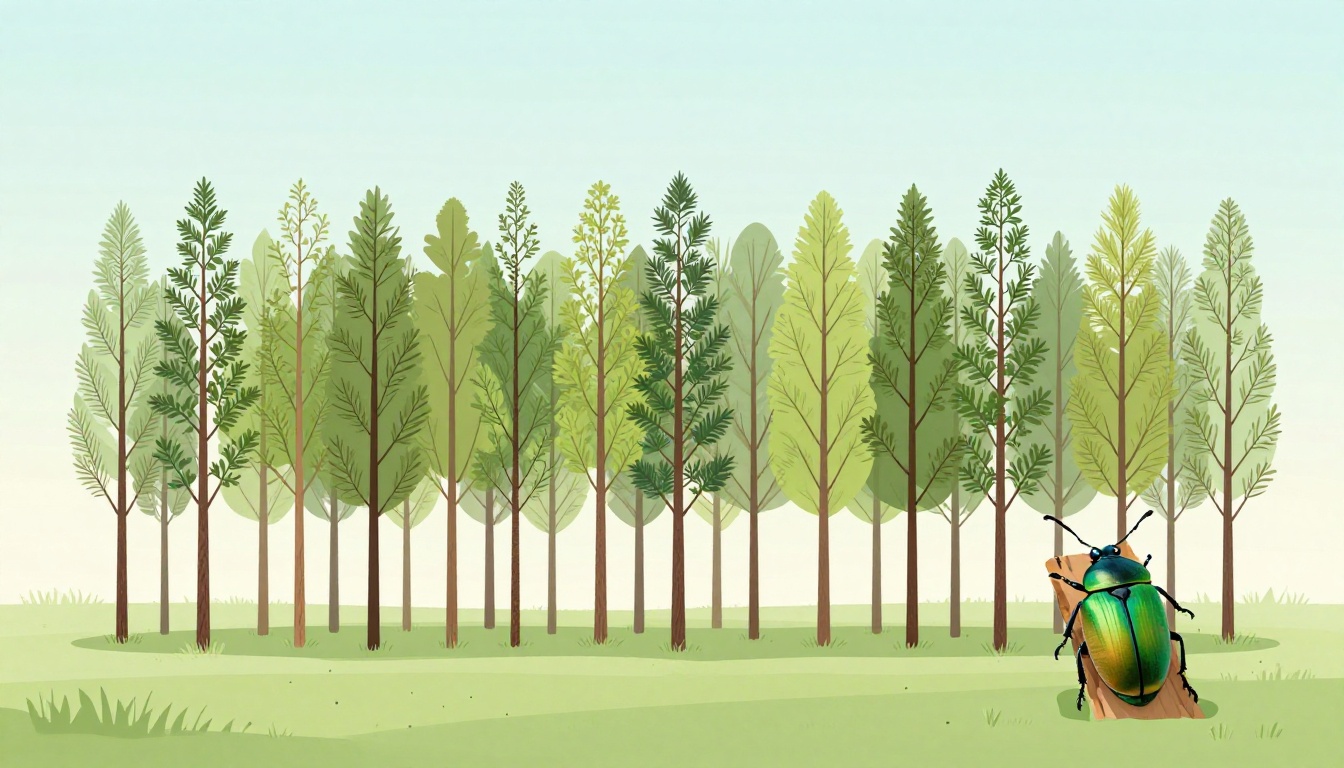
Picture this: You plant a patch of young ash trees on your land. Months later, they all die from a hidden beetle attack. Stories like that happen too often in new forests.
Young trees lack strong defenses. Uniform rows speed up pest spread. Plus, warmer weather and drought stress them more. In 2026, emerald ash borer hit new spots like Fargo and Tennessee counties. These threats kill millions of trees each year.
This guide covers top insect pests and fungal diseases in US new forests. You’ll learn signs and fixes. Keep reading for steps to protect your plantings.
Insect Pests That Target Young Trees First
Insects flock to new forests. Saplings offer tender bark. Close spacing lets bugs jump from tree to tree fast. Recent surveys show these pests hit hard in stressed spots.
Emerald Ash Borer: The Silent Tree Killer
This green beetle slips under ash bark. Larvae eat the inner layers. Trees can’t move water anymore.
Look for D-shaped exit holes. Canopy thins from the top. Woodpeckers peck at larvae, leaving marks. Young ash die quickest, often in one season.
Over 100 million trees lost across North America so far. In 2026, it reached Fargo, North Dakota. Minnesota now tracks it in 59 of 87 counties. Colorado’s Front Range sees spread too.
Hemlock Woolly Adelgid: White Woolly Sap Suckers
Tiny bugs cover hemlock needles with white, woolly sacs. They suck sap from branches. Needles drop, and trees gray fast.
Young hemlocks suffer 50 to 100% loss. Bugs hitch rides on plants and vehicles. US Forest Service tests resistant types in 2026.
Infestations grow in crowded new stands near trade routes.
Pine Beetles: Mountain and Piñon Invaders
These beetles bore into pine bark. They carry fungi that clog tubes. Needles turn red-brown. Pitch tubes and sawdust pile at the base.
Stressed young pines fall first. Colorado’s Front Range braces for outbreaks. Dry heat helps beetles thrive there. Governors warn of devastation in lower pines.
Piñon pines face similar attacks in the Southwest.
Rising Stars: Spotted Lanternfly and Ambrosia Beetles
Spotted lanternfly hops on maples and walnuts. It leaves sticky honeydew. Sooty mold follows, blocking sun.
From Asia, it’s in South Carolina counties now. Ambrosia beetles tunnel into live saplings. They farm fungi inside, killing quick.
Both rise in 2026 stressed plantations.
Emerald ash borer damage on a sapling trunk.
Fungal Diseases Striking at the Roots and Bark
Fungi love damp, packed new forests. They rot roots or block sap. Weak young trees can’t fight back. Armillaria tops lists as a killer.
Armillaria Root Rot: The Underground Assassin
This fungus spreads via roots or soil. White fans grow under bark. Mushrooms pop at bases in fall.
Trees wilt suddenly. Roots decay, so they topple easy. Dense young stands hide spread until late.
It hits many species. Check factsheets from US Forest Service for details.
Oak Wilt and Thousand Cankers: Leaf and Sap Killers
Oak wilt fungus spreads via roots or beetles. Veins brown in leaves. Whole trees die in weeks.
Thousand cankers hit walnuts. Beetles carry it, creating black cankers. Young oaks and walnuts drop fast.
Surveys track both in 10 states through 2026.
Other Fungal Threats on the Horizon
Beech leaf disease curls leaves with nematodes. It yellows and thins crowns. Great Lakes beeches suffer most.
Ash dieback lurks from Europe. Models predict risks in fire-suppressed regrowth. Watch for these in new plantings.
Early Warning Signs and Smart Prevention Steps
Spot trouble early. Act fast to save stands. Owners who check often save most trees.
Key Symptoms No New Forest Owner Should Ignore
Scan for these red flags. Holes in bark signal borers. White wool means adelgids.
Wilting tops or needle drop point to root rot. Red-brown needles scream beetles. Mushrooms at bases yell fungi.
Discolored leaves or sticky residue need checks too.
Five Proven Ways to Stop Pests Before They Spread
- Plant diverse species. Mixed woods slow outbreaks, per studies.
- Monitor edges first. Bugs enter there. Walk lines weekly.
- Ban infested firewood. Heat-treat or source local.
- Set traps or spray early. Target hotspots before spread.
- Thin crowds. Space trees for air flow and strength.
Diverse stands avoid big losses. Remove sick trees quick.
Healthy diverse new forest stand.
New forests face real bugs and fungi like emerald ash borer and Armillaria. But you can fight back.
Top threats hit young trees hard. Smart steps like diversity and checks work.
Start with varied plantings today. Your woods will thank you. Share your pest stories in comments. Check local extension alerts now. Strong forests await.