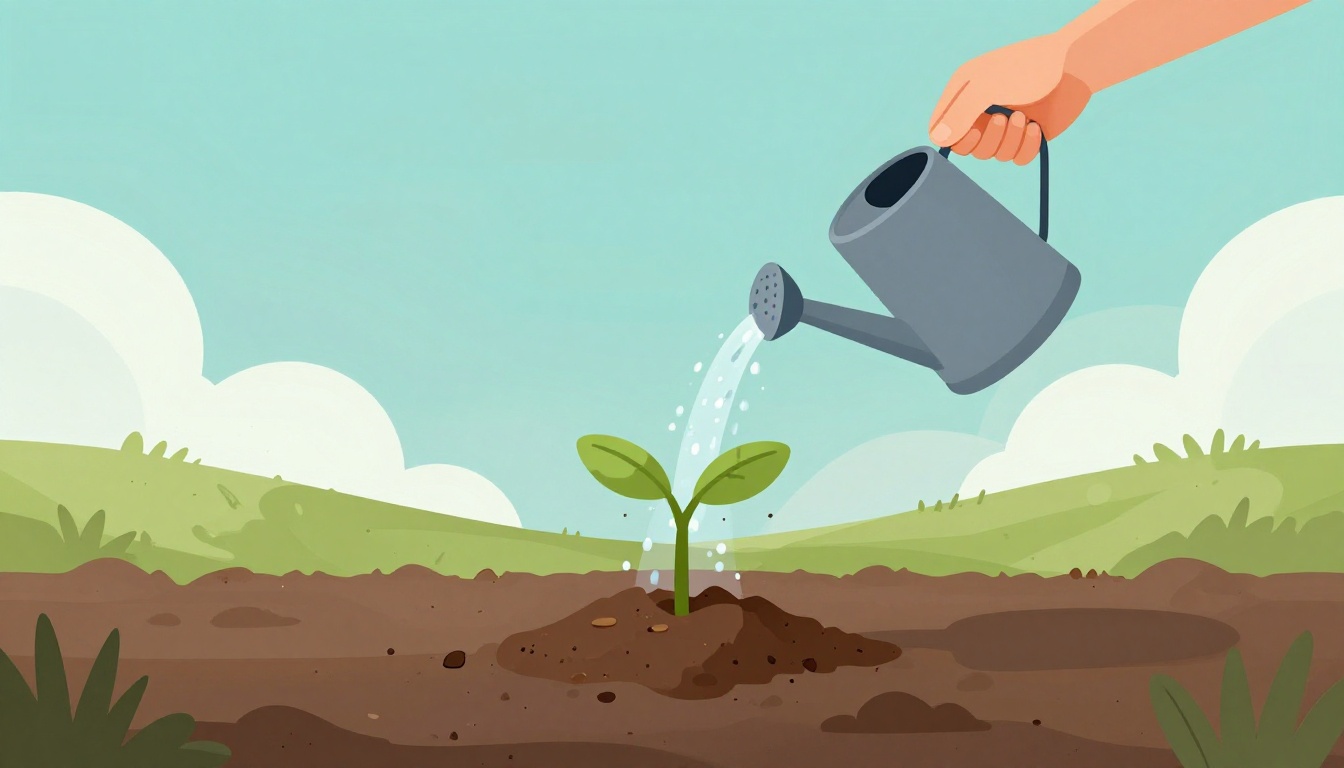
Poor watering causes most newly planted trees to fail. You dig the hole, pop in the sapling, and expect it to thrive. But without the right care, it wilts fast.
The first 1-3 years matter most. Roots need time to spread and grip the soil. During this phase, trees stay vulnerable to drought, heat, and competition from grass. Skip proper steps, and your investment dies young.
This guide covers key tasks. You’ll learn watering schedules, mulching tricks, weeding and pruning basics, mistakes to dodge, and seasonal checks. Follow them, and your tree grows twice as fast. It becomes a backyard star for decades. Let’s get your new tree off to a strong start.
Nail the Watering Routine for Thriving Roots
Watering tops the list for new trees. Roots can’t reach far yet, so they dry out quick. Aim for consistent moisture without drowning them.
In the growing season from April to October, give about 1 inch per week. That’s roughly 10 gallons for a typical sapling. Use deep soaking to push water down 6 inches or more.
Check soil first. Stick your finger or a screwdriver 6 inches deep. Water only if it feels dry. Rain might count toward your total, so track it with a simple rain gauge.
Overwatering starves roots of oxygen. Soggy soil leads to rot. Sprinklers often hit leaves instead of roots, so skip them. Use a hose on low or a tree-watering bag for slow release.
For details on schedules from experts, check the University of Minnesota Extension’s watering guide for new trees.
How Often and How Much to Water in the Early Weeks
Start right at planting. Soak the root ball thoroughly.
Then follow this timeline:
- Days 1-14: Water daily. Use 5-10 gallons slowly around the base.
- Weeks 3-12: Every 2-3 days. Adjust for heat or rain.
- After 12 weeks: Weekly until roots establish in 2-3 years.
Deep water reaches roots. Let the hose trickle for 20-30 minutes per spot. Sandy soil needs more frequent checks. Clay holds water longer, so space it out.
Here’s a quick checklist:
- Dig a test hole nearby. Moist but not wet?
- Cover the full root zone, out to the drip line.
- Morning watering cuts evaporation.
Adjust for April’s spring rains. Dry spells call for extra.
Spotting Water Stress and Fixing It Fast
Watch for clues. Drooping leaves mean thirst. Yellowing or wilting despite water signals too much.
Thirsty tree signs: Leaves curl or drop. Soil cracks. Growth slows.
Fix it with a deep soak right away. Then check daily until perky.
Overwatered signs: Leaves yellow at edges. Soil smells sour. Roots rot.
Stop watering. Improve drainage if needed. Let topsoil dry out.
Prevent issues with routine finger tests. Consistent habits keep roots happy.
Mulch Smartly to Conserve Water and Block Weeds
Mulch changes everything for new trees. It locks in moisture and fights weeds that steal water and nutrients.
Apply 3-4 inches of wood chips or bark. Make a 3-foot wide ring around the base. Leave a 3-inch gap from the trunk.
Benefits stack up. Mulch cools hot soil in summer. It warms cold roots in spring. Grass can’t compete, so your tree gets ahead.
Reapply each spring or fall as it breaks down. This simple layer can double early growth rates.
Trees with good mulch need less water overall. It protects bark from lawn mowers too.
Step-by-Step Guide to Perfect Mulch Application
Get it right the first time. Follow these steps:
- Choose shredded bark, wood chips, or nuggets. Avoid fresh grass clippings.
- Clear weeds and grass in a 3-foot circle.
- Spread evenly 3-4 inches deep. No piles.
- Shape like a donut. Keep trunk bare.
Rake smooth. Edge it neat for looks. Refresh yearly.
For more on correct techniques, see Live to Plant’s mulching tips for new trees.
Why Bad Mulching Harms Your Tree and How to Avoid It
Piling mulch against the trunk spells trouble. It traps moisture and invites rot, pests, and disease.
Call it volcano mulching. Bark stays wet, fungi grow, insects move in. Roots circle the trunk instead of spreading.
Stick to the donut method. Air flows free. Trunk dries quick after rain.
Good mulch feeds soil as it decomposes. Bad stuff chokes your tree from day one.
Weed Diligently and Prune Lightly for Strong Early Growth
Weeds rob new trees blind. They suck up water and crowd roots. Pruning shapes later, but go easy now.
Keep a 3-foot circle weed-free. Hand-pull them weekly in growing season. Mulch cuts the work big time.
For pruning, focus energy on roots. Remove only dead or broken branches first year.
Inspect monthly. Healthy structure builds over time.
Pull Weeds Without Hurting Tree Roots
Grab weeds low. Pull full roots to stop regrowth.
Use a hand trowel for tough ones. Dig shallow, avoid tree roots.
Do it after rain when soil gives. Weekly checks in spring and summer keep ahead.
Mulch helps here. Fewer weeds mean less fight.
Safe Pruning Rules for New Trees
Cut dead, diseased, or rubbing branches. Use clean pruners.
Wait until after first year for more. Trees need all leaves for root power.
Sterilize tools with alcohol. Make angled cuts outside the branch collar.
Minimal work now pays off later.
Dodge These Top Mistakes That Kill Young Trees
New trees die from simple slips. Pros see the same ones over and over.
Inconsistent water tops the list. Drought kills fast. Overdo it, and roots suffocate.
Mulch volcanoes invite disaster. Heavy pruning shocks the tree.
For a full rundown of pitfalls, read Backyard Garden Lover’s list of tree planting mistakes.
Skip fertilizer first year. Water and mulch provide enough.
Watering Goofs and How to Get It Right
Underwatering starves roots. Leaves brown at tips.
Overwatering yellows leaves. Soil stays mushy.
Fix with soil checks. Deep soak, then wait. Track weekly totals.
Mulch and Pruning Errors to Skip
Volcano mulch rots trunks. Pull it back now.
Over-pruning strips leaves. Energy goes to wrong place.
Light touch wins. Focus on roots first.
Seasonal Checks to Keep Your Tree Healthy Long-Term
First three years set the pace. Weekly water in spring and fall. Weed as needed.
Summer heat means extra soaks. Mulch checks too.
Winter brings wind and cold. Inspect for cracks or rodent chews. Water if dry spells hit.
After year three, ease up. Still watch droughts.
Patience pays. Your tree rewards steady care.
Your new tree thrives with right water, smart mulch, light weeding and pruning, dodged mistakes, and seasonal eyes.
Simple steps build roots strong. Check it today. Share your challenges in comments. Plant one this spring and watch it grow shade for years.