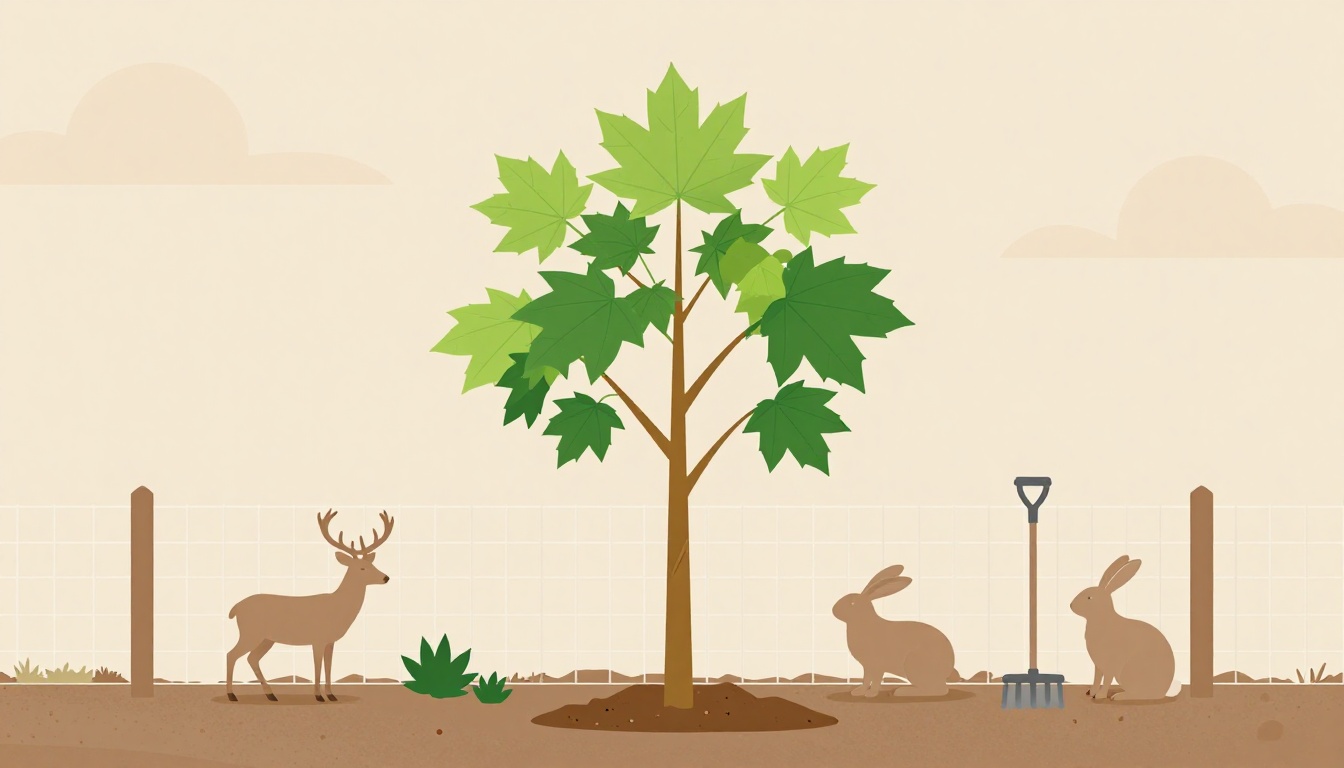
You plant a young maple in your backyard. It promises shade and beauty for years. But overnight, deer rub the bark raw. Rabbits gnaw the base clean. Your investment vanishes.
Young trees face big risks. They have soft bark and shallow roots. Animals love them. Lawn tools nick trunks. Harsh weather cracks bark. Chemicals burn leaves. These threats hit hard in the first three years. Yet simple steps work well. You can spot damage early. Barriers block pests best. Shields handle tools and weather. Year-round care seals the deal.
This guide shows you how. First, learn to spot trouble fast. Then build deer and rabbit blocks. Stop voles and squirrels next. Guard against yard hazards too. Finally, get maintenance tips. Protect your young trees from animals now. Watch them thrive.
Spot Early Signs of Damage to Save Your Trees
Young trees under three years old suffer most. Quick spots save them. Damage spreads fast because bark heals slow. Check weekly in fall and spring. Walk your yard. Look close at trunks and bases.
Deer leave rubbed bark at two to four feet high. You see vertical strips gone. Hoof prints mark soft soil nearby. Bucks scrape antlers in rut season. This girdles trunks. Trees die without bark flow.
Rabbits chew low. They make clean, angled cuts at 45 degrees. Snow piles let them reach higher. Voles tunnel under. They gnaw roots hidden by mulch. Squirrels clip bark high up. Look for smooth girdles.
Non-animal harm mimics pests. Mowers gouge scratches. Herbicides wilt leaves brown. Sunscald cracks south sides. Winter dries needles.

Act fast. Prune dead parts. Call an arborist for bad girdles.
Deer and Rabbit Clues You Can Not Miss
Deer rubs shine in fall. Bucks polish trunks smooth. Antler marks scar deep. Look two to four feet up. Hoof prints confirm it.
Rabbits hit ground level. Their teeth cut bark at sharp angles. You find 45-degree slices. Clean edges differ from ragged dog chews. Snow boosts reach. They climb drifts easy.
Check after storms. Fresh prints tell tales. Early finds let you wrap quick. Kansas Forest Service details these patterns.
Rodent and Vole Tracks Under the Surface
Voles make grass runways. They leave volcano dirt piles. Tunnels run under snow. Gnaw marks hide at soil line.
Peek under mulch. Bark shreds near roots. Rodents girdle low. Squirrels chew higher clips.
Clear snow in warm spells. Inspect bases. Hidden damage kills roots first.
Set Up Barriers That Block Deer and Rabbits Effectively
Physical blocks beat sprays. Repellents wash off in rain. Fences and wraps last. They cost less long-term. Install before winter.
Use eight-foot fences for deer. Pick one-quarter to one-half inch mesh. Bury six inches deep. Anchor firm. Angle tops out.
For single trees, wrap trunks. Wire mesh or plastic guards work. Go six feet high. Rabbits need 24 to 36-inch chicken wire. Bury with flared lips.
Corrugated spirals shield cheap. Pros include easy setup. Cons mean checking for gaps. Costs run $10 to $50 per tree.
Follow steps. Measure height first. Dig trench. Secure mesh tight.
Fence Your Garden or Tree Group Smartly
Choose woven wire. Eight feet tall stops deer jumps. Mesh size blocks fawns too.
Bury base six inches. Flare out underground. This stops rabbits digging under.
Angle top outward 30 degrees. Add T-posts every 10 feet. Electric strands help big yards. Test often. Colorado State Extension covers fence specs.
Trunk Wraps and Guards for Quick Solo Tree Defense
Burlap suits evergreens. Wet trunk first. Fold triangle style. Staple loose.
Plastic tubes vent air. Leave one-inch gap. Metal guards last years.
Check after wind. Loose wraps invite rot. Remove in spring.
Stop Voles, Squirrels, and Rodents in Their Tracks
Voles chew under cover. Squirrels climb high. Rodents hit roots. Barriers plus habits win.
Hardware cloth cylinders block best. Use one-quarter inch mesh. Bury six inches. Extend 24 to 36 inches up. Flare bottom out.
Clear mulch six inches from trunk. Mow grass short. Ditch weeds. These cut hideouts.
Squirrels need metal flashing. Two feet wide to five feet high. Botanical sprays back up. They suit new growth. Safe for pets.
Combine for wins. Barriers lead.
Underground Defenses Against Diggers
Install cloth deep. Dig 12-inch trench around tree. Bend bottom out six inches. Fill with gravel.
Mulch two to three inches deep. Keep off trunk. Gravel rings add blocks.
Voles hate open ground. Illinois Extension notes vole runway signs.
Climber-Proof Tricks for Squirrels
Nail flashing smooth. Start at ground. Overlap seams. Reach five feet.
Baffles work near sheds. Plant nut-free types nearby. Keep limbs trimmed.
Guard Against Tools, Weather, and Chemical Hazards
Yard work wounds bark. Weather dries or cracks it. Chemicals drift easy.
Plastic guards stop mower bumps. Mesh tubes flex on hits.
Spray herbicides far. Use shields on windy days. Burlap blocks sunscald. Mulch roots deep before freeze.
Salt roads harm. Extra wraps help. Prep fall. Remove wraps spring.
Bump-Proof Shields for Yard Work
Snap plastic guards on. Cover two feet up. They take trimmer hits.
DIY with mesh. Tie loose. Replace cracked ones yearly.
Train mowers wide. Mark trees with stakes.
Winter Prep to Beat Harsh Conditions
Water deep till ground freezes. Wrap trunks loose. Shovel snow from bases.
Burlap screens block wind. Face away from sun. Check mid-winter melts.
Year-Round Maintenance and Smart Prevention Hacks
Inspect monthly. Peek post-snow. Fix wraps tight.
Call pros for girdles over 50%. Plant spruce or thorns. Deer skip them.
Rotate sprays if needed. 2026 sees smart sprinklers. Motion starts water bursts.
Eco formulas rise. Raised beds near food plots help. Companion plants distract.
Checklist: Barriers up fall. Clear zone weekly. Check spring. Combine methods.
| Protection Layer | Best For | Key Tip |
|---|---|---|
| Hardware Cloth | Voles/Rodents | Bury 6-8 inches |
| Tree Guards | Deer/Rabbits | 3.5+ feet high |
| Flashing | Squirrels | 5 feet up |
| Burlap Wraps | Weather | Vent air gaps |
Barriers first. Inspect often. Your trees mature strong.
Protect now. Try one barrier this week. Share your wins in comments. What pest hits your yard hardest?