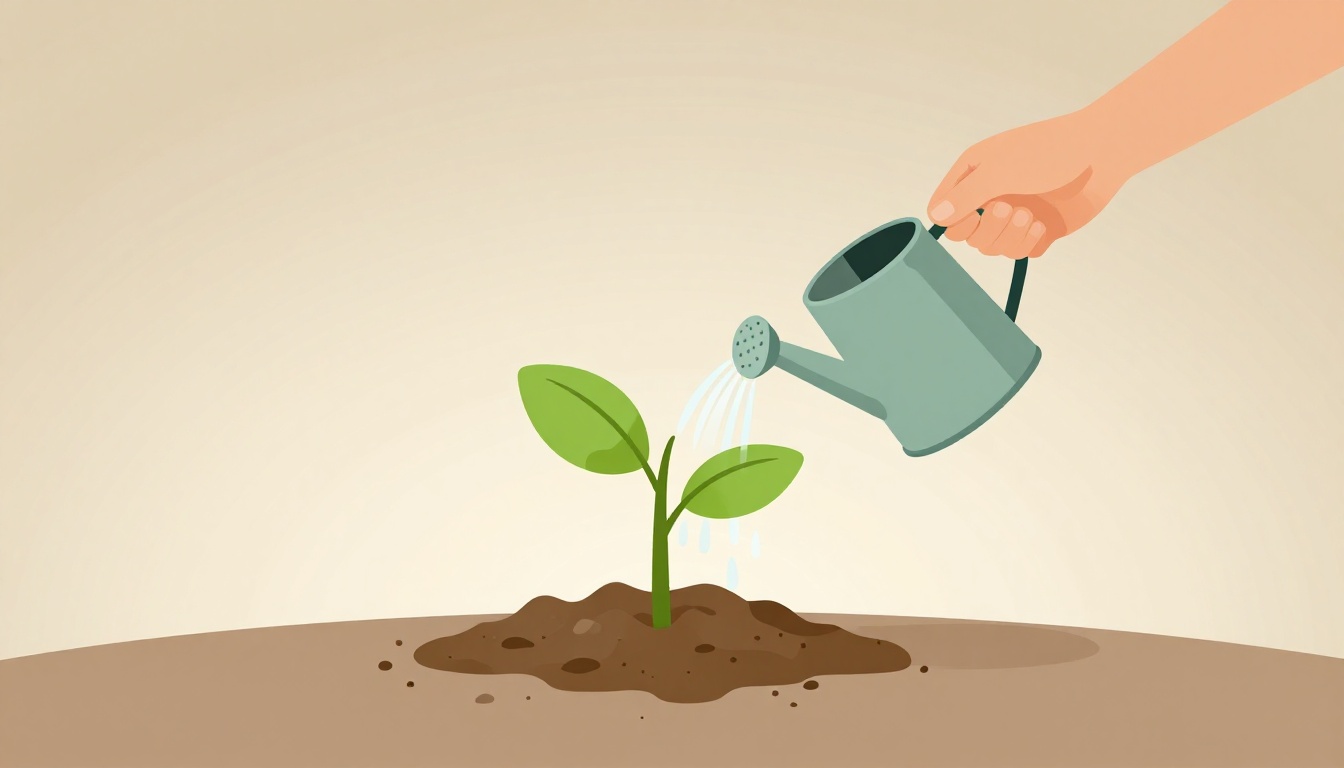
You plant a young tree in your yard, full of hope for shade and beauty in years to come. A few days later, leaves wilt. Did you water too much? Or not enough? Young trees depend on you for the first one to two years to grow deep roots and beat the odds. Proper care boosts survival rates from under 50% to over 90% in tough spots.
Many new owners guess at watering. They drown the roots or let soil crack dry. This post covers how often should you water young trees with a clear timeline, tweaks for your yard, smart techniques, problem signs, and easy aids like mulch. You’ll keep that sapling thriving, even as droughts hit nearly half the US in April 2026.
Follow This Step-by-Step Watering Timeline for New Trees
New trees need a set schedule to push roots deep. Always probe soil two to six inches down first. Water only if dry. This builds strength from day one.
Start with daily checks in week one. Then ease back. By year two, roots handle more on their own. Adjust up during dry spells, as experts note.

Daily Care in the Crucial First Weeks
Water every day for the first one to two weeks. Keep soil moist, like a wrung-out sponge. Never let it turn soggy. Hot, dry air calls for this close watch.
Do it early morning. Water soaks in before sun bakes the ground. A slow hose trickle works best. Check daily; roots heal from transplant shock.
Iowa State Extension backs this: water newly planted trees every day for four or five days, then taper. Your tree settles fast with steady moisture.
Easing Off: Every Few Days Through the First Months
Shift to every two to three days from weeks three to twelve. Let the top inch dry between drinks. This trains roots to reach deeper.
Heat bumps it to every other day. Feel soil before you turn on the hose. Roots grow tough this way. Skip if rain soaks the area.
Consistency matters here. Trees build resilience step by step.
Settling In: Weekly Rhythm for Year One and Two
After three months, water once a week. Aim for the first year deep soak. In year two, check weekly at six inches down. Water if dry.
This matches about one inch of rain. Roots spread wide by now. Less frequent checks save time. Droughts in the West and Plains mean extra vigilance this spring.
Tweak the Schedule for Your Weather, Soil, and Seasons
Base plans flex with your spot. Weather shifts needs most. Soil drains at different speeds. Seasons change rain patterns.
Hot summers double frequency from May to September. Wind dries soil fast too. Cool rains cut it back. Track if one inch fell weekly.
Before a table on soils, note drainage rules all. Probe often.
| Soil Type | Drainage Speed | Watering Frequency |
|---|---|---|
| Sandy | Fast | Every 5-7 days |
| Loam | Medium | Every 7 days |
| Clay | Slow | Every 10-14 days |
Sandy soils thirst quick, so check twice weekly in heat. Clay holds water; space it out to avoid rot. Loam stays balanced. This setup matches real yard tests.
Summer Heat Waves vs. Rainy Spells
Heat waves demand daily checks. Water every one to two days if dry. Almost half the US faces drought now, per recent data. South Central Plains suffer most.
Rainy cool spells skip routine. Soil stays wet. Don’t let it parch fully though. Balance keeps roots happy.
Match Watering to Your Soil Type
Dig in to know your soil. Sandy lets water slip away fast. Add sessions there.
Clay clings tight. Water less, but deep. Loam hits the sweet spot.
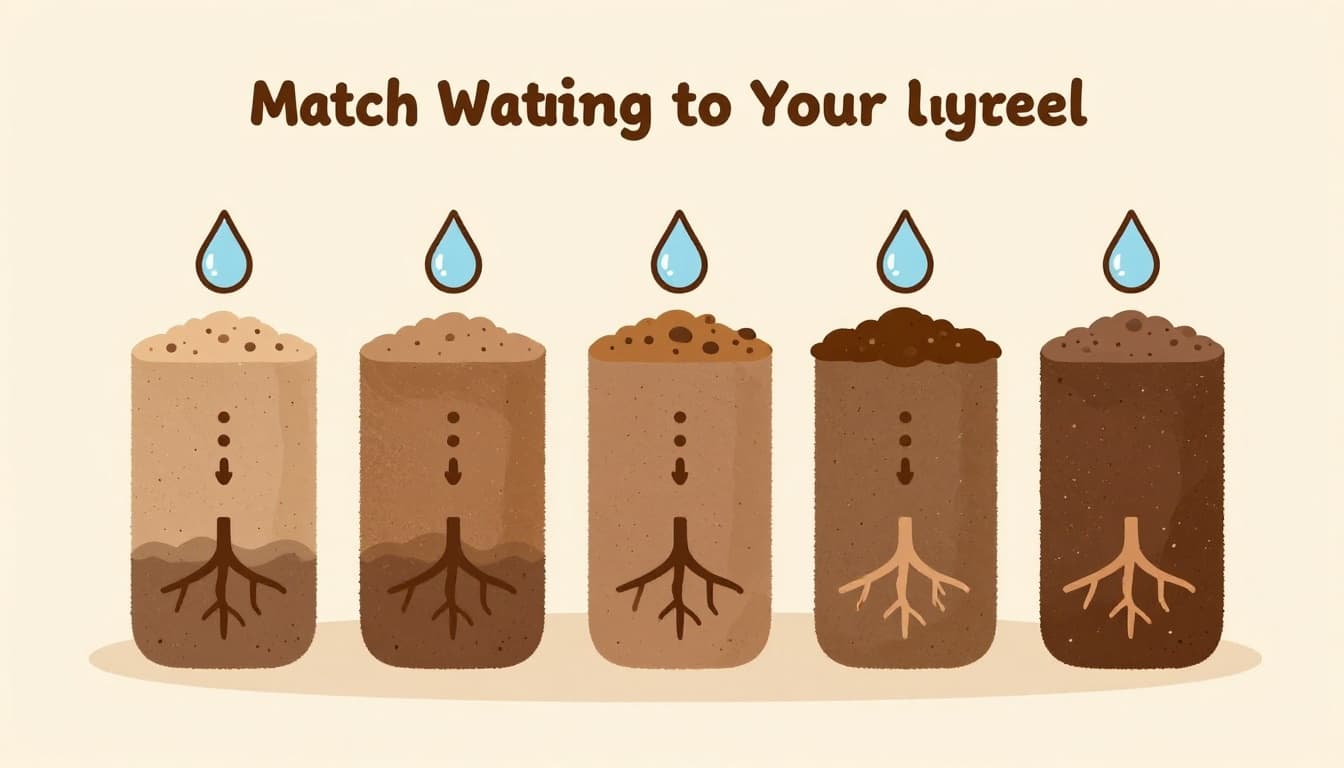
UNL Extension explains: efficient watering fits soil type. Test yours for best results.
Deliver Water Deep and Slow for Strong Root Growth
Shallow sprays fail. Push water six to eighteen inches down, to the drip line. Use five to twenty gallons per session, by tree size.
Slow drip beats quick floods. Roots chase moisture deep. Morning timing cuts loss.
Test with a screwdriver. It slides easy if moist twelve inches down.

Calculate the Right Amount Each Time
Small trees take five to ten gallons. Larger ones need up to twenty. Soak till no runoff.
This penetrates deep. Roots anchor firm. Measure output with a bucket first.
Proven Techniques That Beat Surface Spraying
Coil soaker hoses at the base. They sip slow over hours.
Watering bags hold fifteen to twenty gallons, drip for four to eight hours. Drill buckets in a ring work too. Low sprinklers cover wide.
All beat hose blasts. Shallow roots snap in storms.
Catch Problems Fast: Underwatering, Overwatering, and Top Mistakes
Spot stress quick. Underwatering wilts leaves, browns edges, droops branches. Soil stays bone dry.
Overwatering yellows leaves, mushes soil, breeds rot. Puddles linger.
Mistakes pile on: shallow sprinkles, lawn systems, rain ignores, midday pours, soil mismatches.
Fix by adjusting. Monitor close.

Red Flags Your Tree Needs More Water
Leaves curl or drop. Fine twigs die back. Act now. Deep soak revives most.
Drought stress hits fast in dry 2026 conditions.
Warnings You’ve Gone Too Far with Water
Yellow lower leaves signal excess. Mushy roots smell bad. Improve drainage. Cut back sessions.
Unlock Easier Care with Mulch, Species Smarts, and Expert Wisdom
Mulch cuts watering needs. Spread two to four inches of wood chips or bark in a three-foot ring. Keep it from the trunk.
It holds moisture, cools soil, stops weeds. Refresh yearly. Roots grow four times more under it.
Know your species. Maples and oaks drink more than pines. Always check soil though.
Experts agree: consistent deep water for one to two years seals success. CSU notes mulch retains soil moisture by 25-50%.

With droughts rising, these steps matter now.
Follow the timeline, tweak for conditions, water deep and slow, watch for signs, add mulch. Check soil first every time. Your young tree stands tall for decades.
Grab a trowel this week. Test and water right. Share your tree story in comments below.