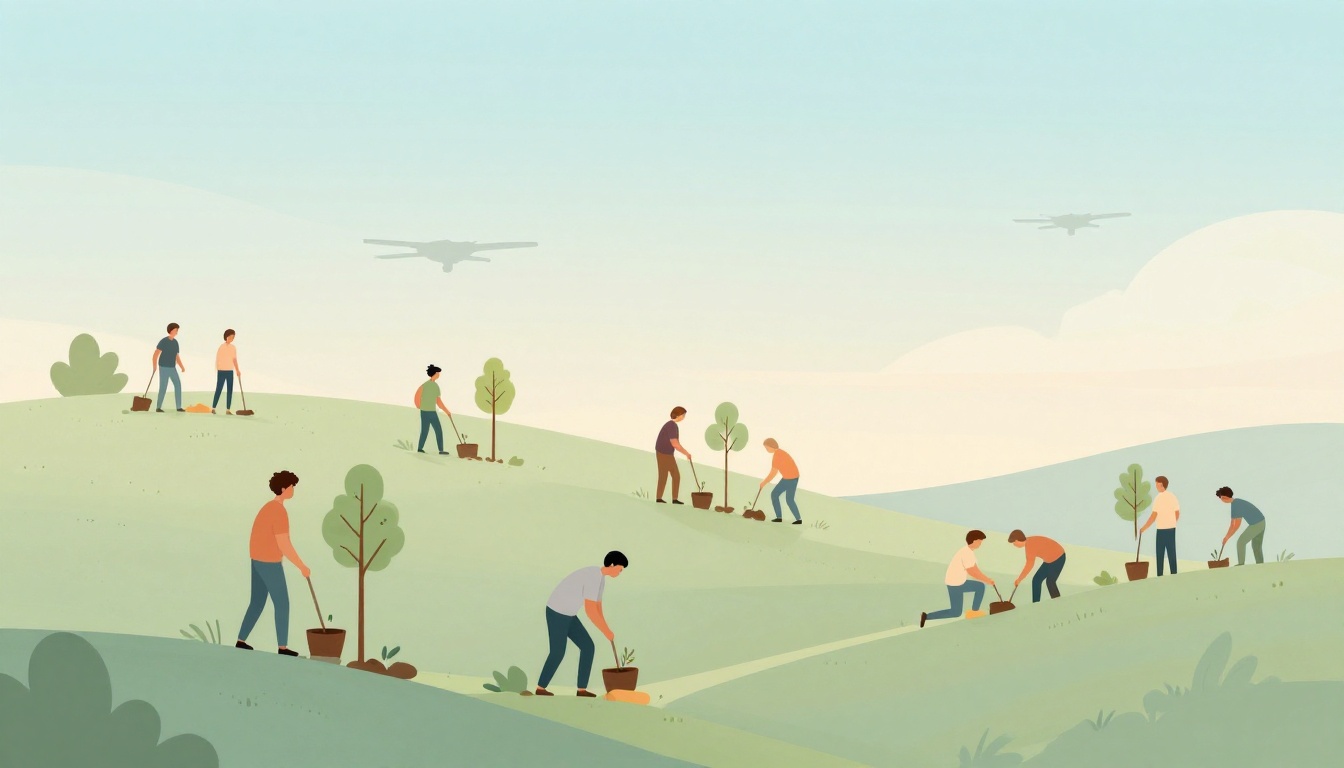
Climate change hits hard in 2026. Wildfires rage more often, and carbon levels climb. You can fight back by starting an afforestation project. This means planting trees on land that lacks them to build new forests.
These new woods store carbon, stop soil erosion, and help wildlife thrive. Anyone can do it, from a small landowner to a community group. You don’t need huge funds or expertise right away.
This guide walks you through every step. You’ll learn to plan, pick sites, handle laws, fund it, plant, and care for trees. Trends like drone checks and carbon credits make it easier now. Ready to grow a forest? Start with clear goals.
Define Your Goals and Pick the Perfect Site
Success begins with smart planning. First, set goals that fit your vision. Then, scout land where trees will flourish. These choices shape everything else.
Think about what you want. Do you aim to trap carbon? Control erosion? Boost local birds and bugs? Use the SMART method: specific, measurable, achievable, relevant, time-bound. For example, plant 500 trees on 10 acres by fall 2026 to sequester 20 tons of CO2 over 10 years.
One tree can absorb about 1 ton of CO2 in its life. So, your project adds up fast. Write a simple plan. Include a site map, timeline, budget, and actions. Free templates from extension services help. Download one and fill it in.
Also, study your area’s ecosystem. Check climate risks like drought or floods. Look at past land use, such as farming or logging. This avoids big mistakes later.
Set Achievable Goals That Match Your Vision
Pick goals that help nature and people nearby. A wildlife habitat draws pollinators and deer. Carbon storage fights warming. Community green space cuts urban heat.
Start small if you’re new. Aim for 1-5 acres first. That builds skills without overwhelm. Your plan lists the project description, steps, and costs. Budget $2,000-$5,000 per acre for seedlings and prep.
Talk to local foresters early. They offer free advice on goals that work. In addition, match goals to real needs, like post-fire recovery in the West.
Evaluate Sites for Tree-Thriving Potential
Now, hunt for the right spot. Good soil holds water and nutrients. Test pH, fertility, and drainage. Kits cost under $50, or send samples to labs.
Check sunlight and water access. Trees need full sun and steady moisture, but not floods. Avoid rocky ground or spots with invasives like kudzu. Steer clear of steep slopes prone to erosion.
For big areas, use satellite maps or drones. They spot issues fast. Beginners stick to 5-20 acres. Larger sites suit groups after fires or clear-cuts.
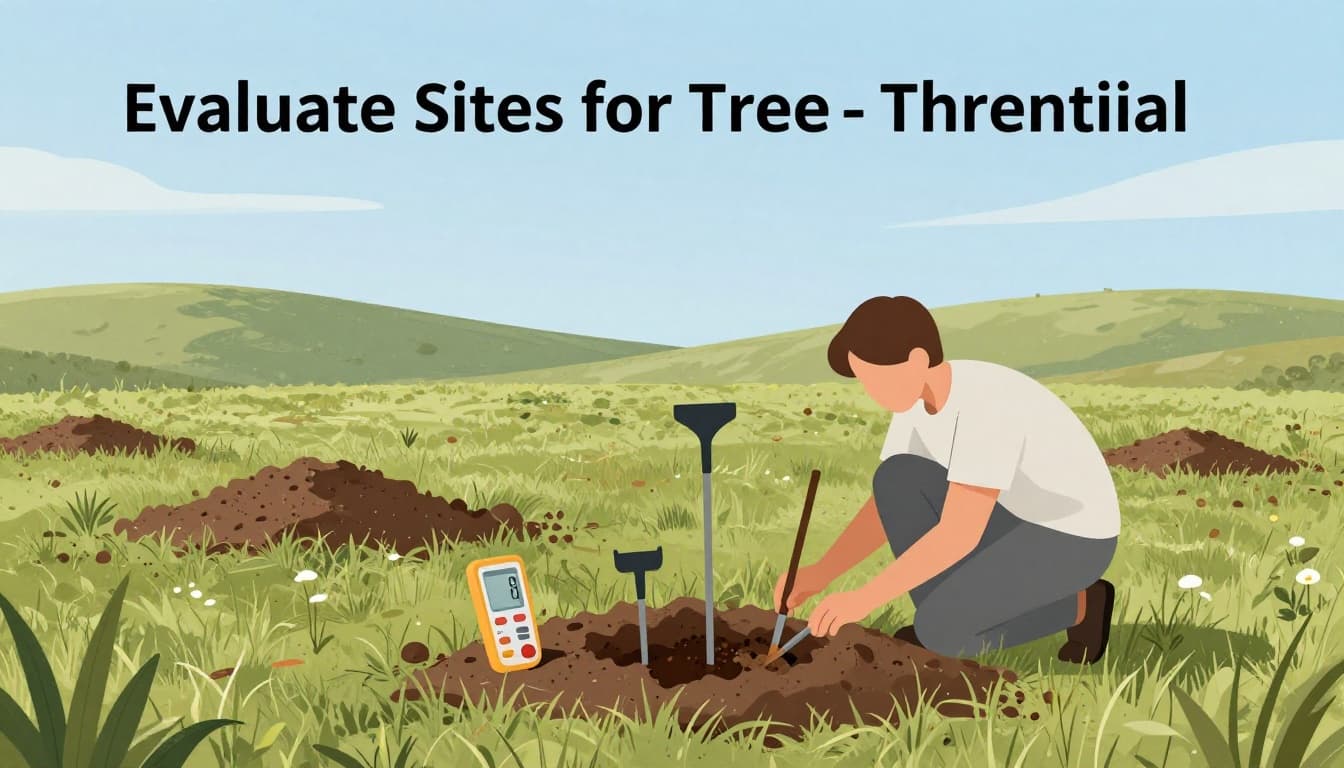
Follow the ten golden rules for reforestation to pick native trees that match your soil and climate. Experts stress this for long-term wins.
Handle Legal Requirements and Secure Funding
Laws protect land and forests. Check them first. Then, chase money sources open in 2026. Funds cover half or more of costs.
On private land, you often need no permit for small plots. Public land requires approvals. Always use native species. No invasives allowed.
Contact your state forestry service. They guide on rules. For example, New York’s Regenerate NY program funds planting and prep until August 2026.
Navigate Permits and Regulations Smoothly
Submit site plans to forest services. Detail prep, protection, and species. Updates like Verra’s dynamic benchmarks from 2025 help now.
Get approvals before buying seedlings. This saves time. Local rules vary, so call ahead. Most importantly, document everything for audits.
Unlock Grants and Carbon Credit Opportunities
Grants abound. Regenerate NY offers up to $1 million per project. Apply with your plan, budget, and timeline.
Carbon credits pay big. Verra’s VM0047 methodology uses satellites for removals. Register by late 2026. Non-profits like National Forest Foundation match funds.
Strong apps show impact metrics. Start early, because deadlines loom.
Source Healthy Seedlings and Prepare the Land
With site and funds set, buy trees. Choose natives adapted to your tests. They survive better and boost biodiversity.
Visit certified nurseries. They guarantee healthy stock. For the Northeast, oaks or maples work. In the South, pines fit.
Prep the land next. Clear weeds with mowers or goats. Avoid chemicals if you can. Install fences against deer. Use soil data to till right.
Match species lists from state guides. This prevents failures.
Plant Trees Using Smart Techniques for High Survival
Planting day excites. Time it for spring or fall 2026. Wet soil helps roots grab hold.
Dig holes twice as wide as roots. Space trees 8-15 feet apart, per Cornell guides. Use tubes for shade and protection.
Pick the Right Planting Method for Your Land
Hand planting suits small sites. Dig one hole at a time. It’s precise and cheap.
Machines punch pits fast for big fields. Aerial drops work for steep spots, but survival dips to 40%.
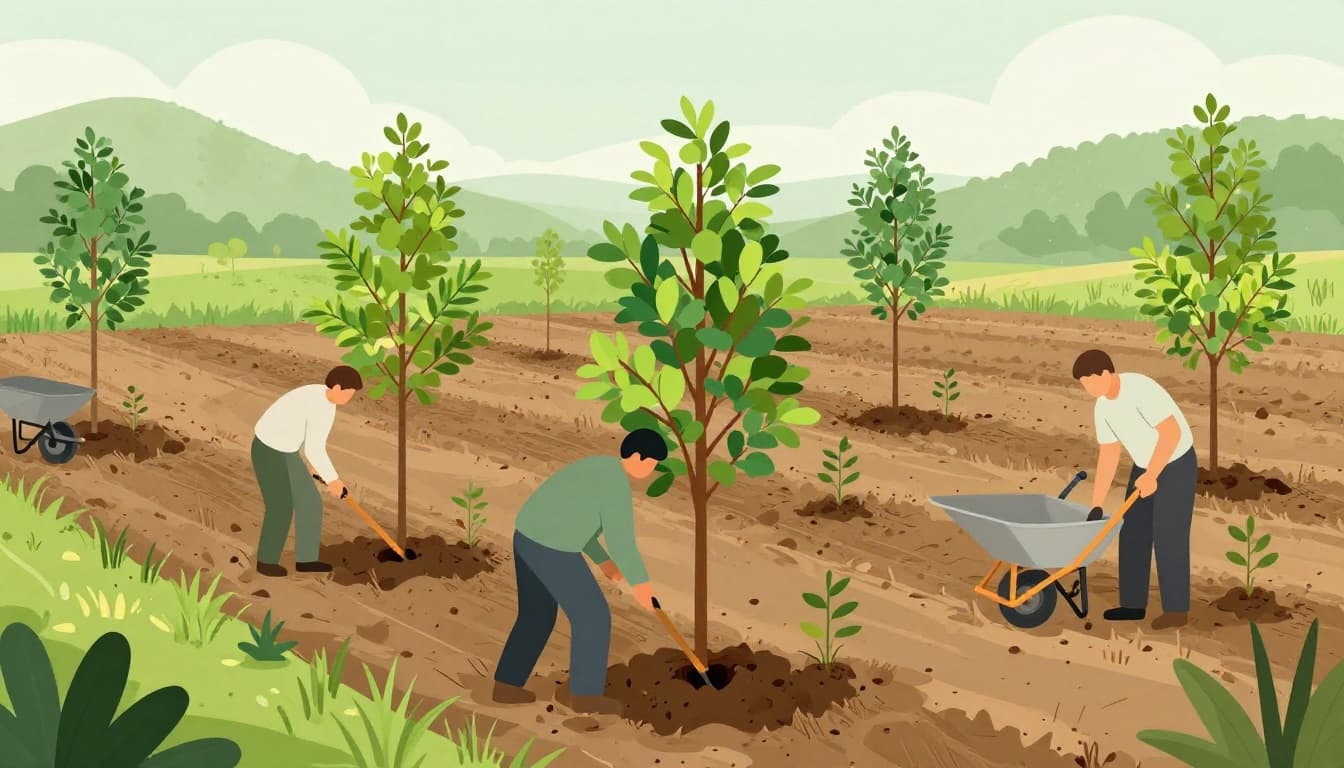
Pick based on terrain. Hand methods hit 80% survival.
Time It Right and Space Trees Properly
Fall planting lets roots grow before winter. Spring avoids frost. Weed first, then plant.
Follow spacing for species. Pines need more room than shrubs.
Maintain Your Trees, Monitor Progress, and Beat Challenges
Care starts day one. Water weekly at first. Then, check growth.
Protect from pests and animals. Diverse natives resist better.
Provide Ongoing Care to Help Trees Thrive
Fertilize lightly year two. Mulch cuts weeds. Fences block browsers.
Remove competitors early. This boosts survival to 90%.
Track Growth and Measure Real Impact
Visit plots weekly, then yearly. Measure height and survival.
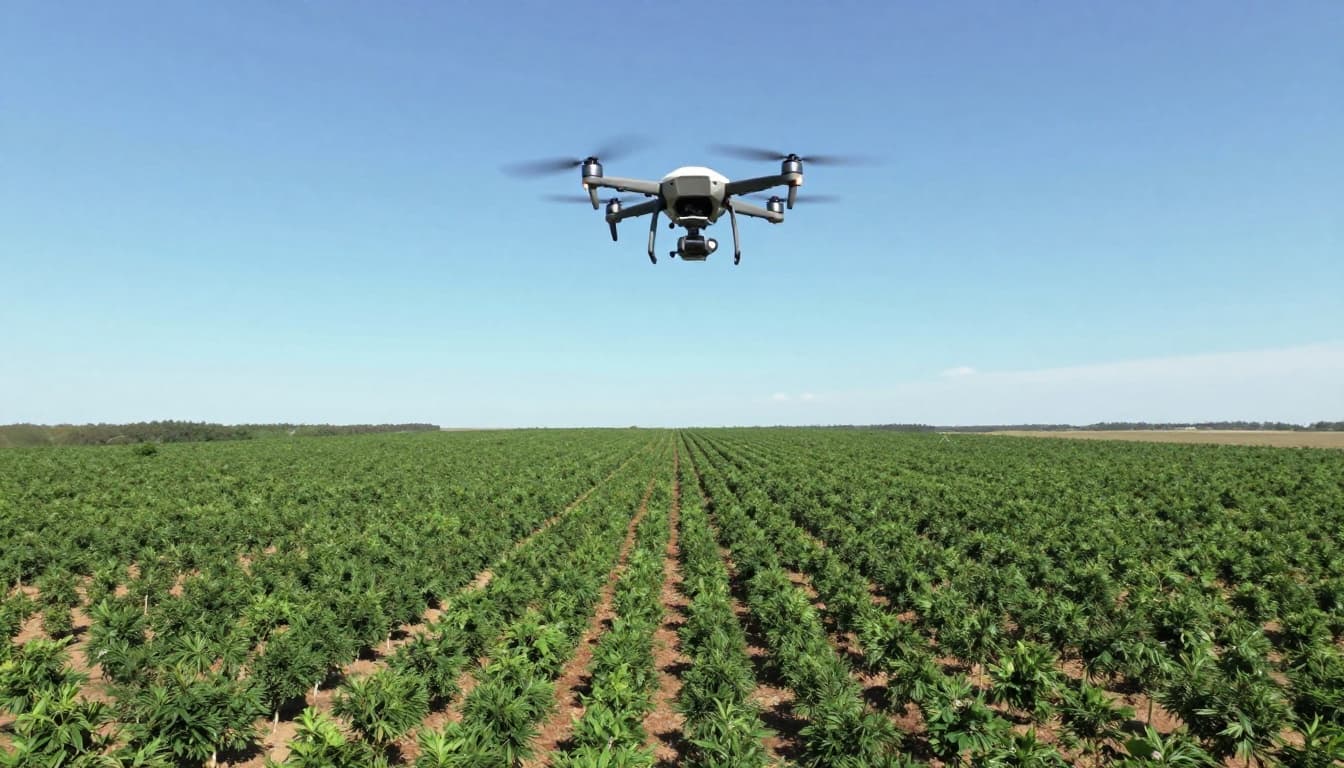
Drones and satellites track carbon over five years. Replant losses fast.
Overcome Hurdles with Proven Fixes
Wrong species kill projects. Switch based on tests. Pests? Scout early.
Funding gaps? Budget tight. Fires? Plant fire-resistant types.
Commit long-term. Adapt to climate shifts.
Draw Inspiration from Real-World Success Stories
Real projects motivate. In California, Apple’s redwood restore with The Conservation Fund protects habitat and jobs.
The Nature Conservancy replants longleaf pine in Alabama post-hurricane. New York’s nursery pushes 680 million trees by 2040.
Sierra National Forest lets residents adopt ponderosa pines in 2026. Lessons? Natives, monitoring, and partners win.
Your project can join them.
You’ve got the steps: plan your site, clear legal hurdles and grab funds, source and prep, plant smart, then maintain and track. In 2026, these forests cool the planet and lift communities.
Start today. Call your local forester or apply for Regenerate NY. Plant natives, watch them grow. Share your story below. What site will you choose?